
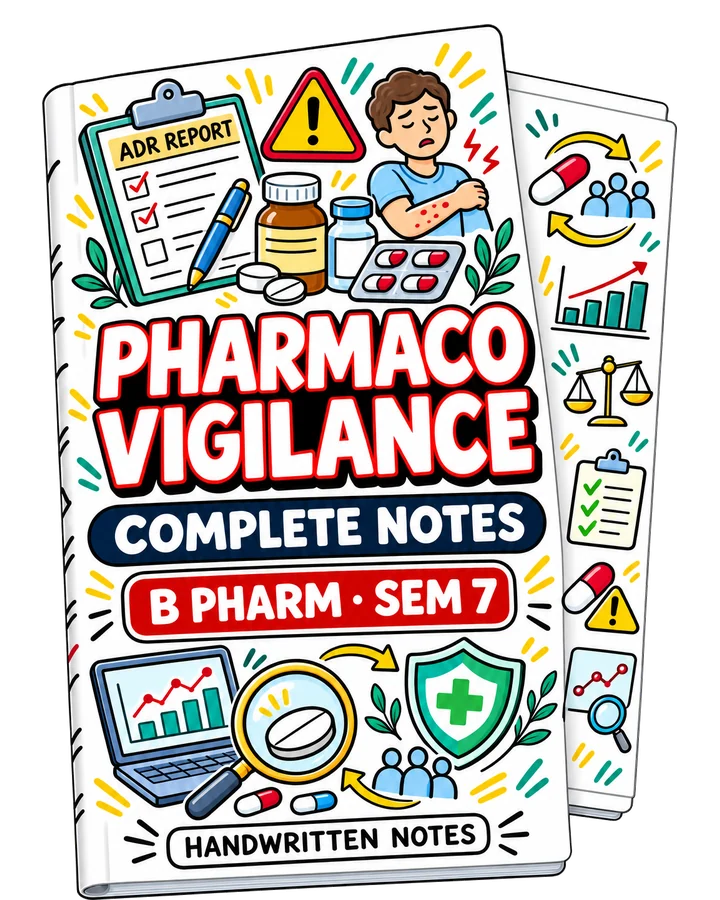
B Pharm · PCI syllabus · Handwritten PDF notes
B Pharm Semester 7Pharmacovigilance Notes
Instant PDF download after payment. Pay once, keep forever.
- Instant download
- Lifetime access
- UPI, GPay, PhonePe, cards
Watch before you buy
Students on All Notes PDF
Real students talking about how they revise with our handwritten notes.
How it works
Get your notes in 3 easy steps
No app, no waiting. The whole thing takes under a minute.
- STEP 110 sec
Choose your notes
One subject, any two, or a full class set.
- STEP 230 sec
Pay with UPI or card
GPay, PhonePe, Paytm or card. Pay once, no subscription.
- STEP 3Instant
Download your PDFs
Tap Download on any chapter. Links never expire.
- Log in
- My library
- Download
Complete coverage
All 16 chapters, one PDF each
See every downloadable PDF included with B Pharm Semester 7 Pharmacovigilance, organised chapter by chapter.
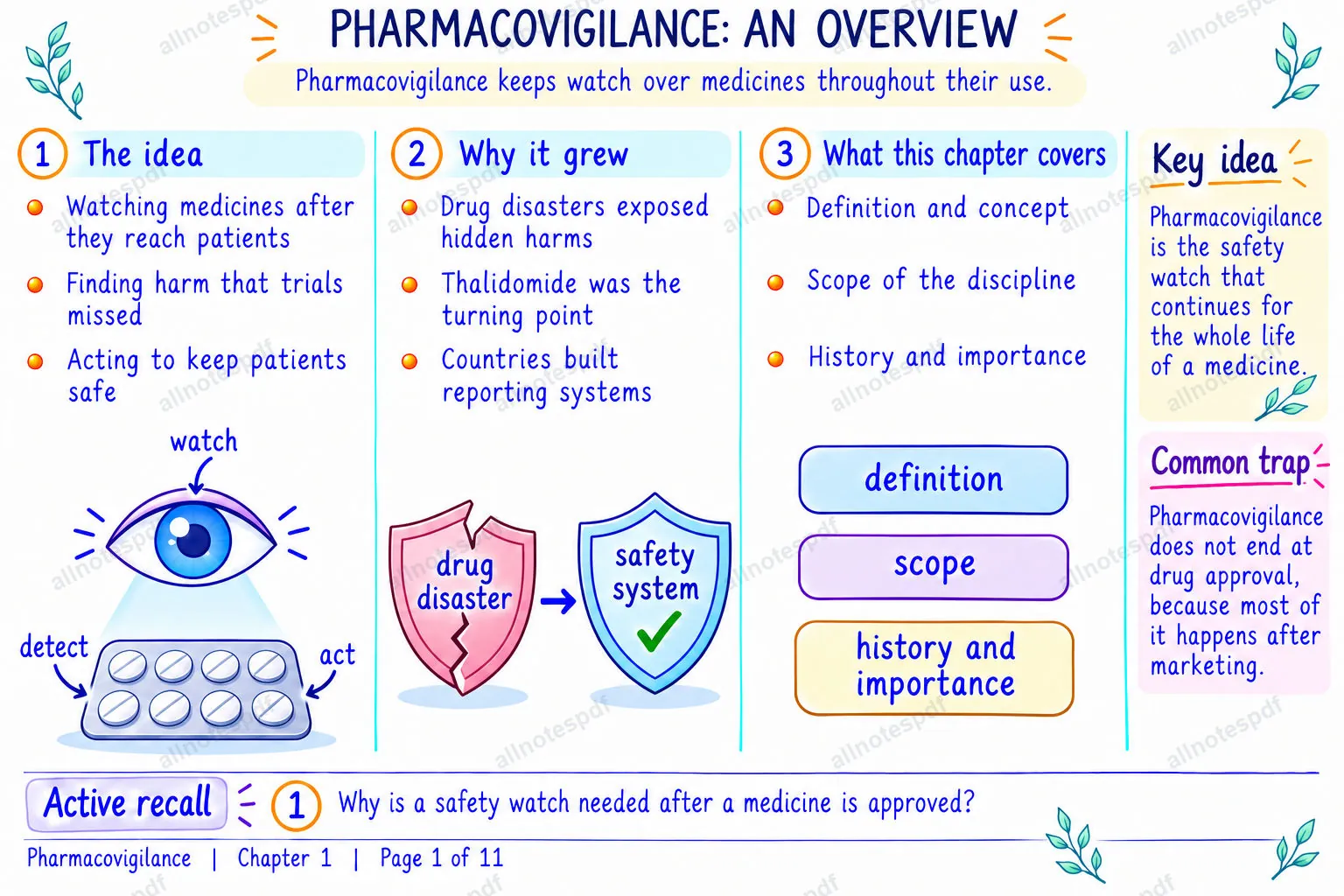
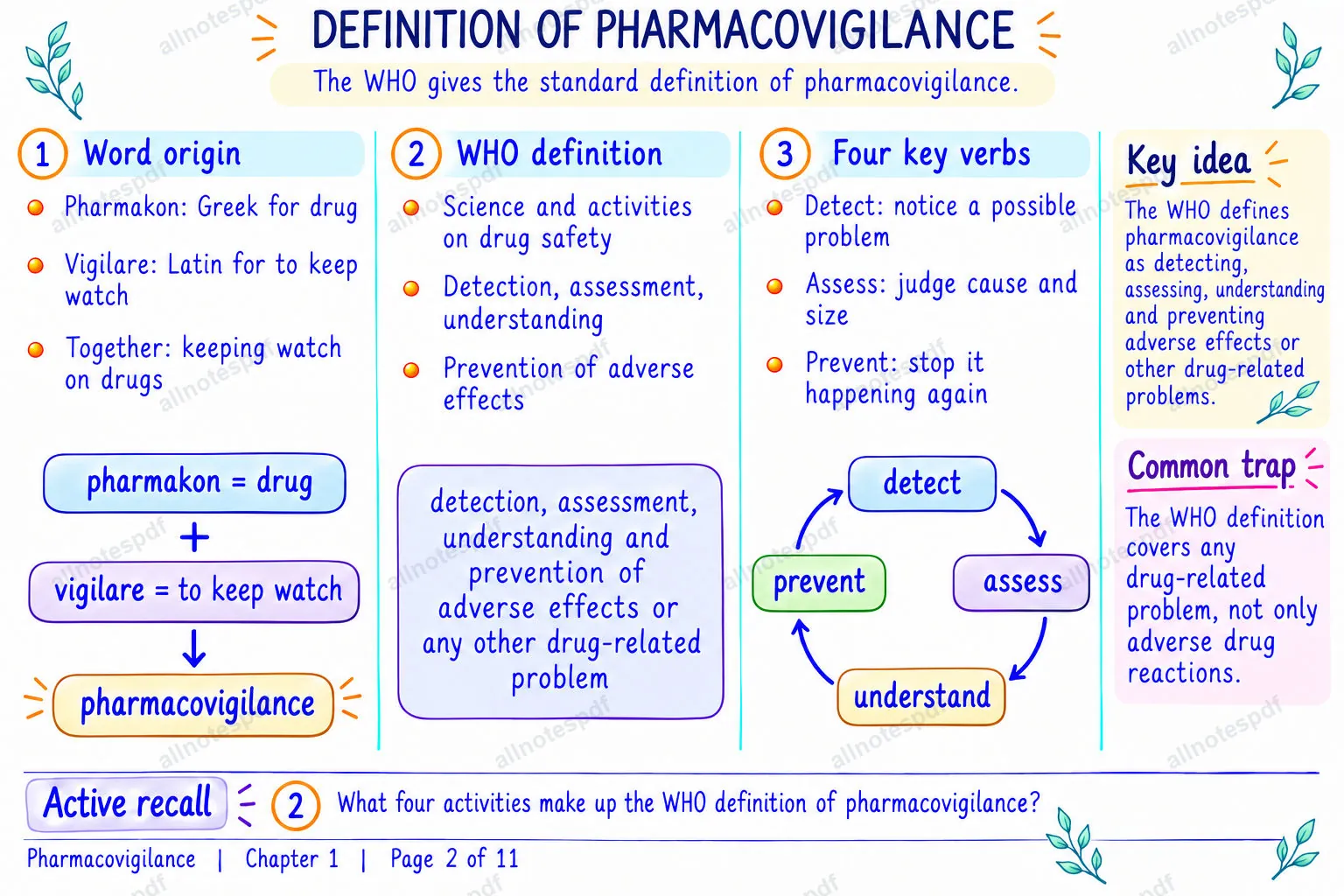
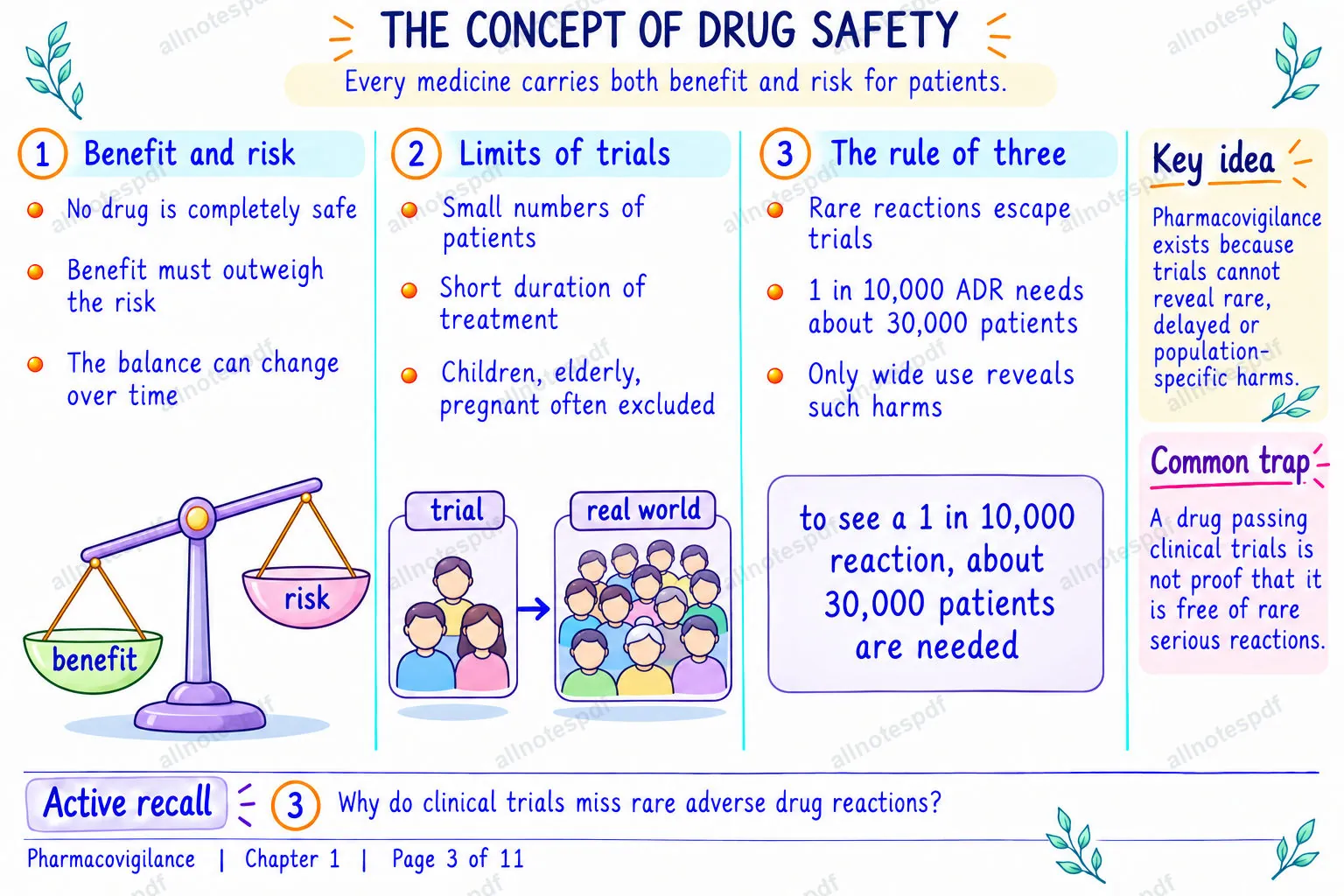
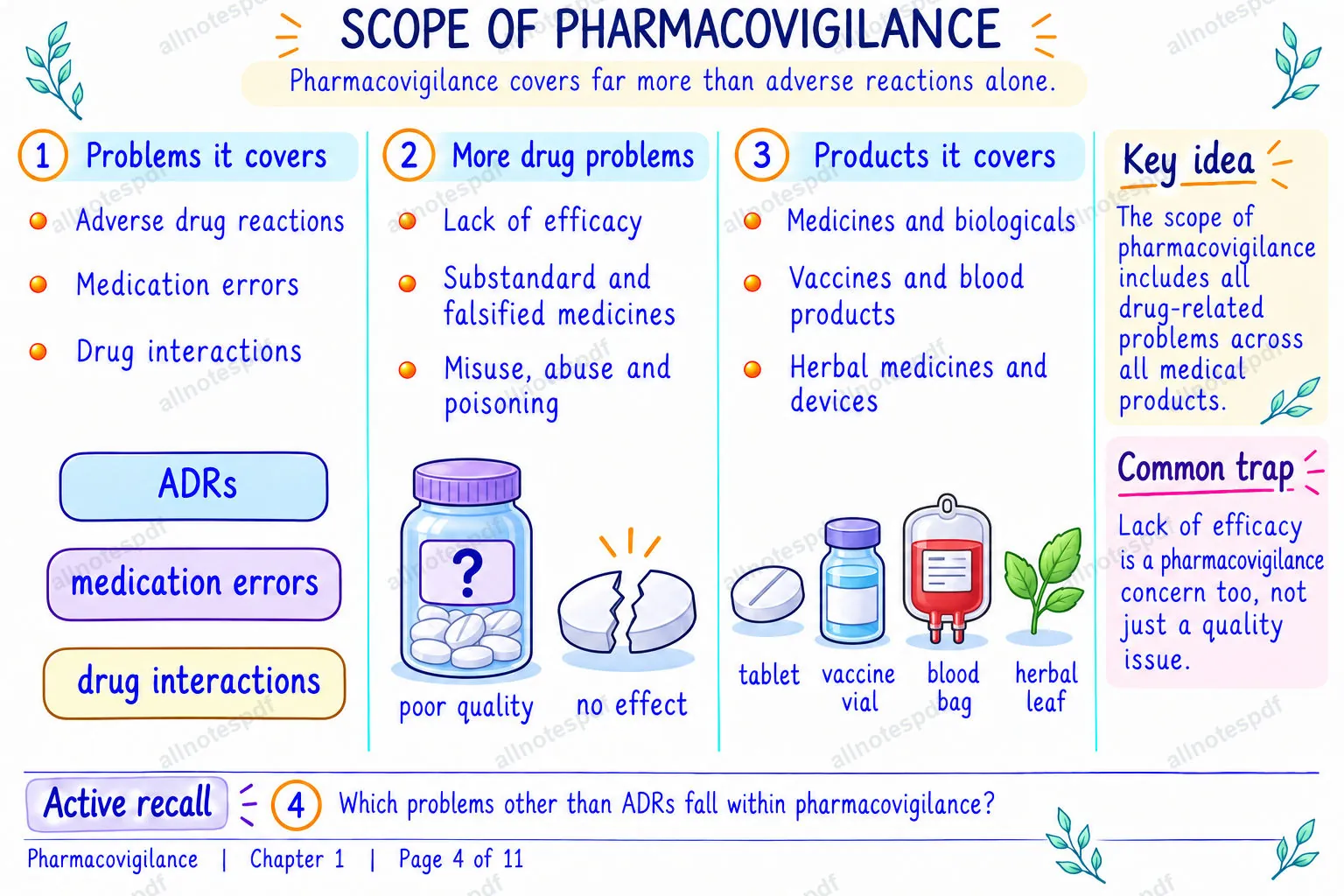
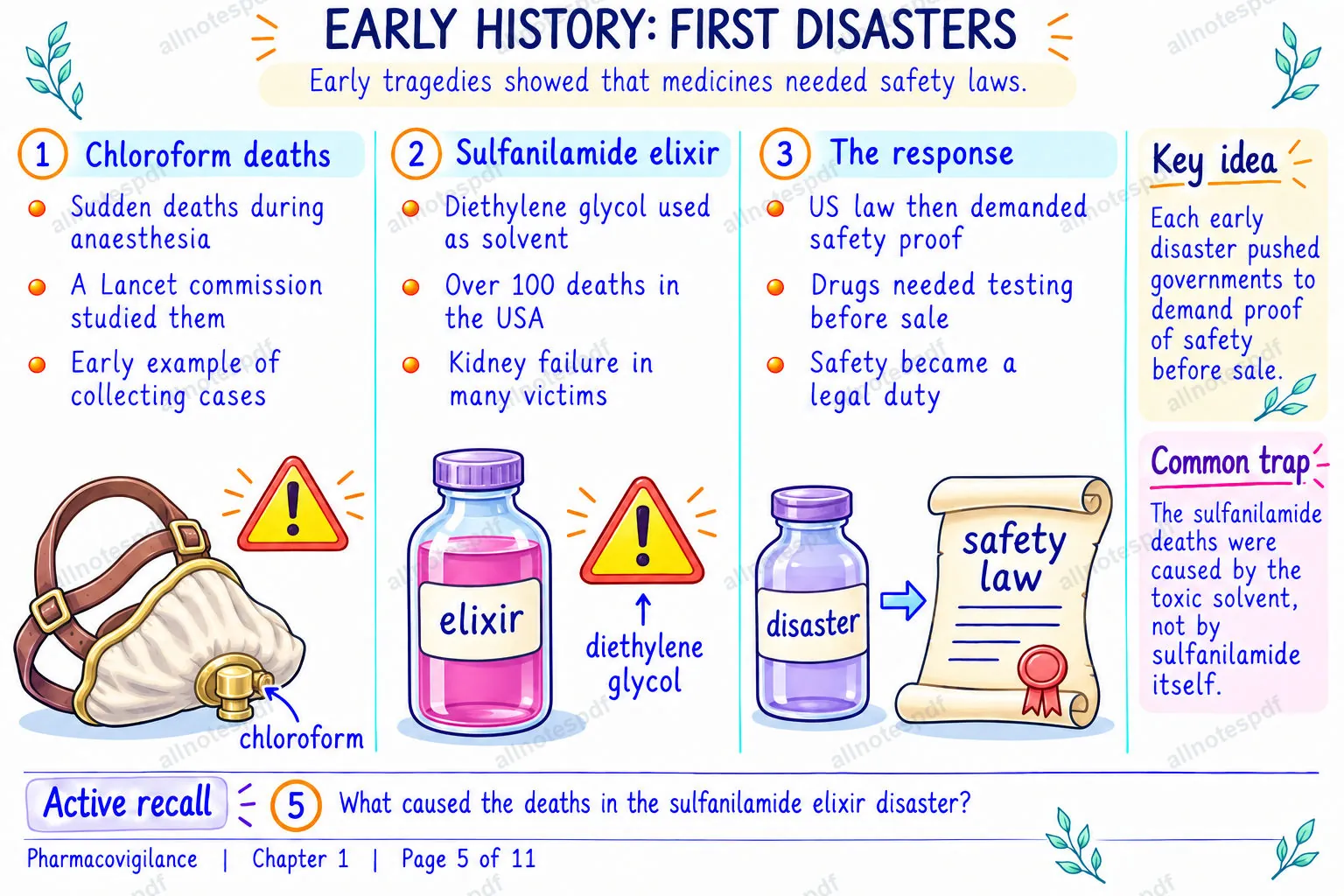
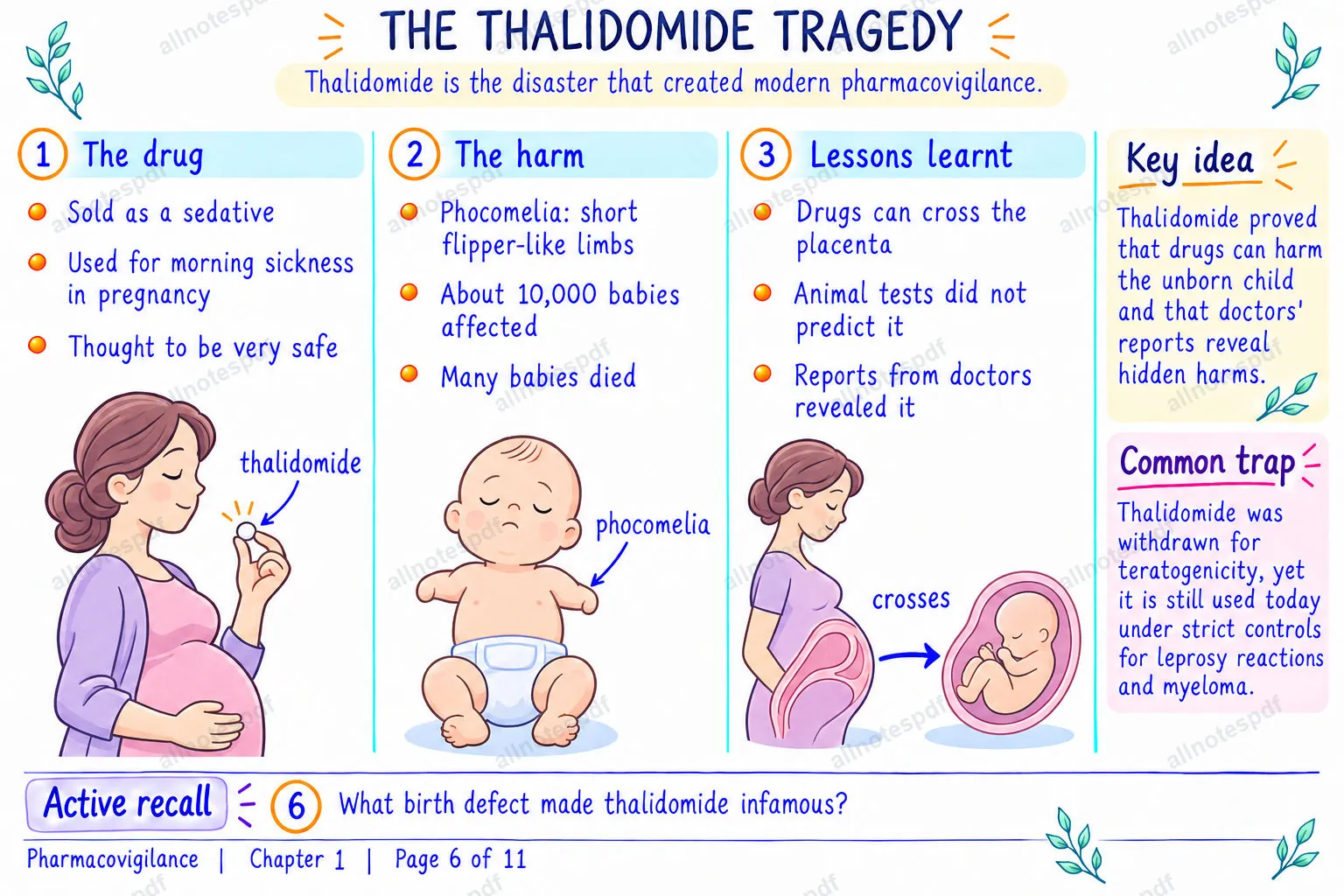
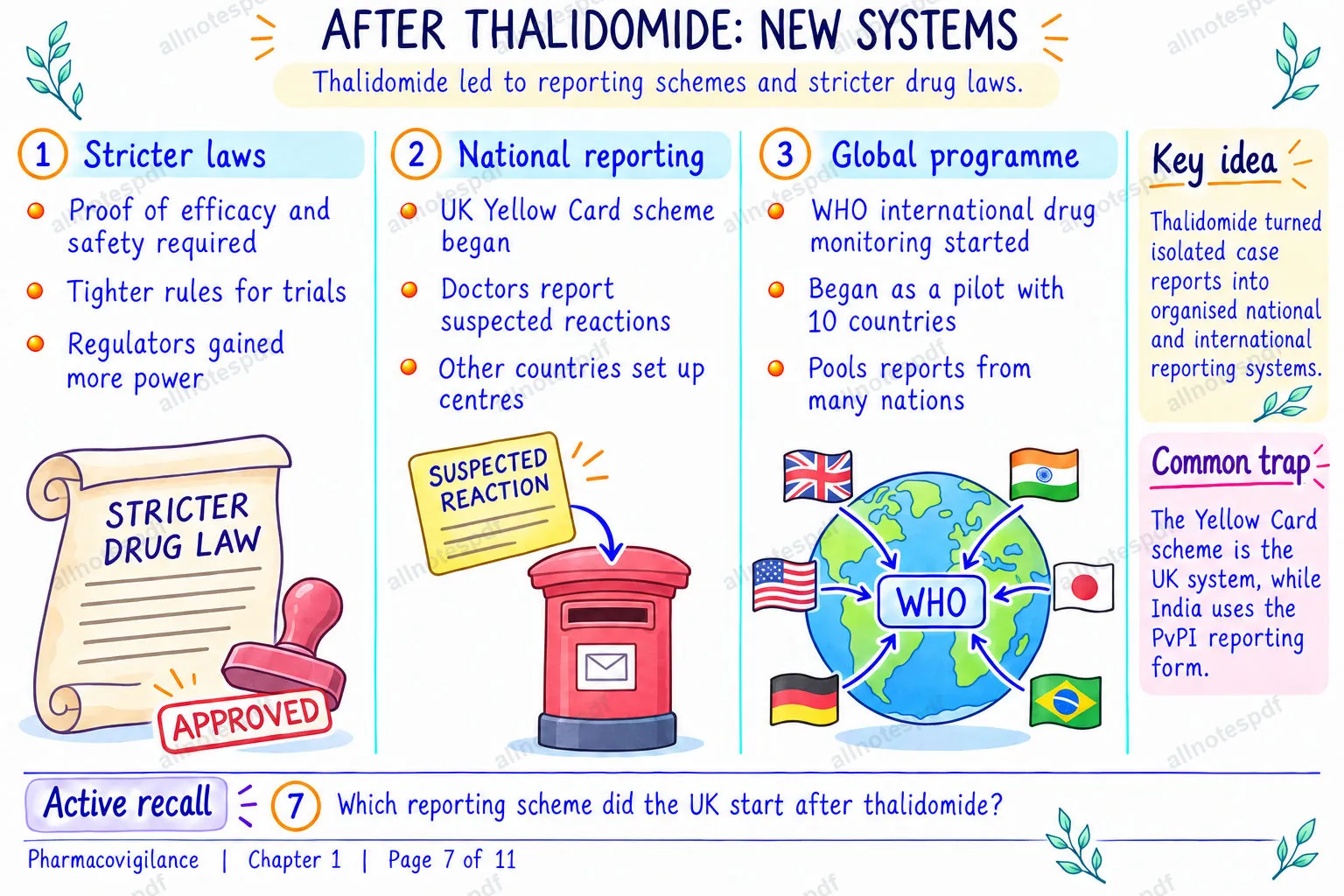
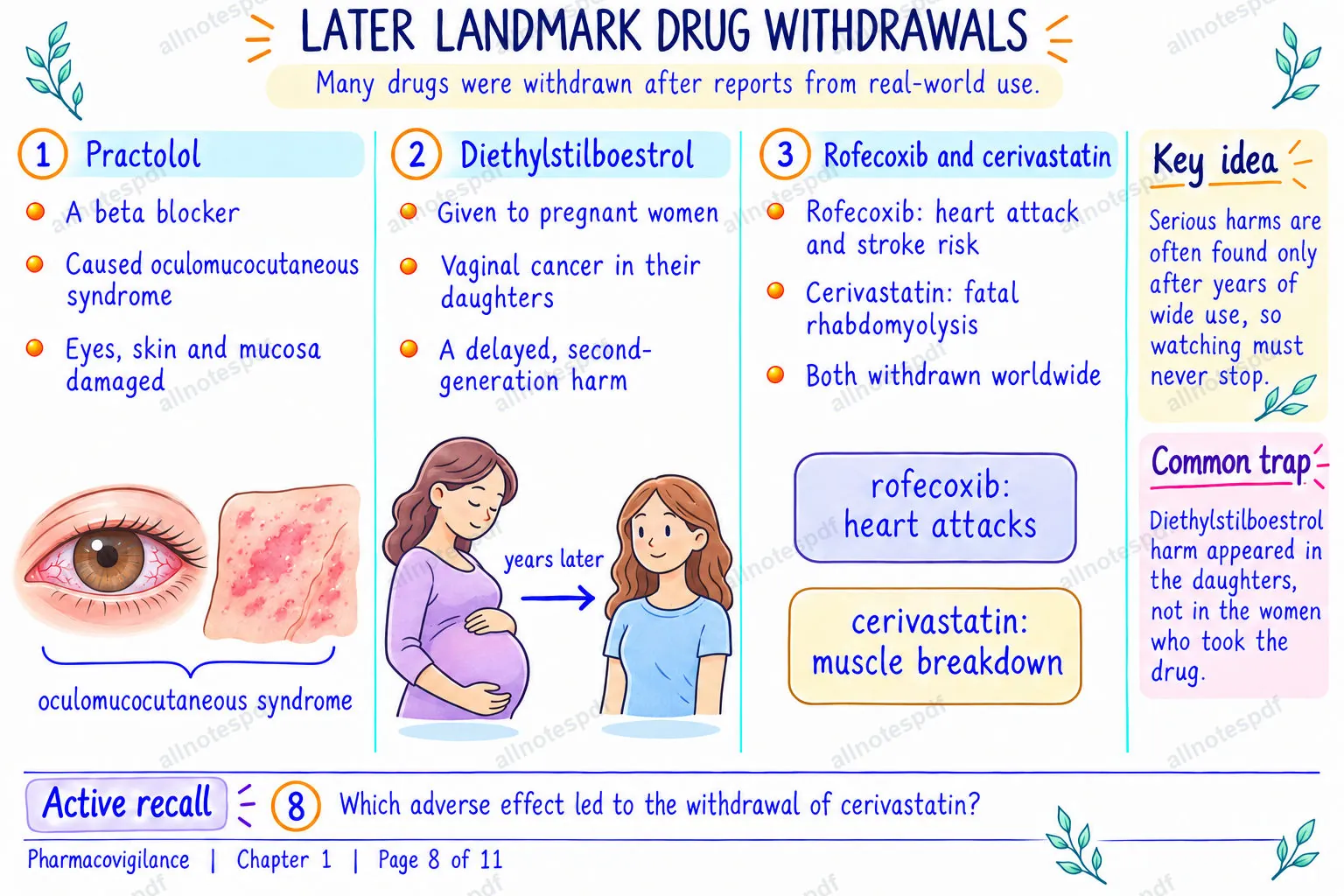
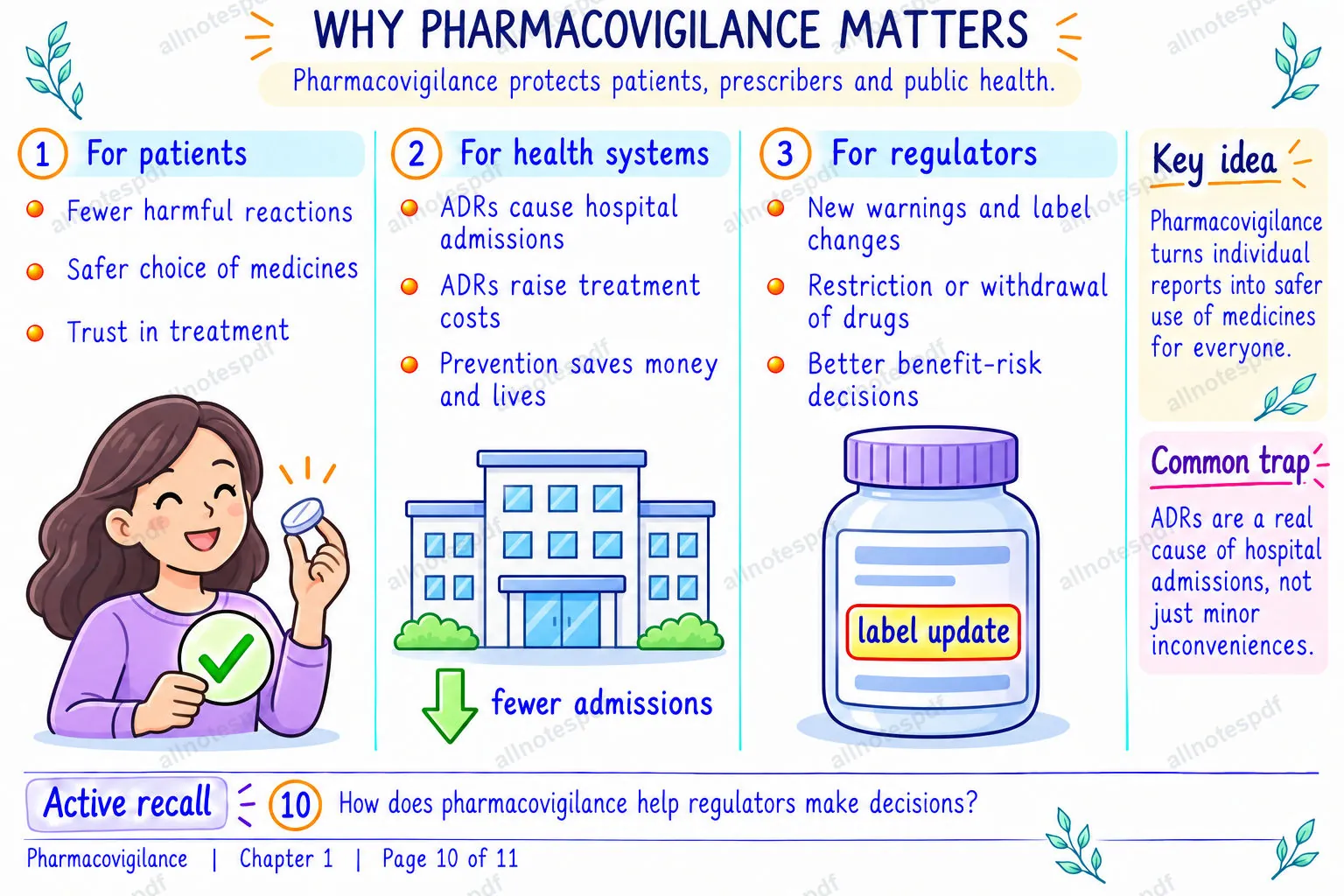
Covers pharmacovigilance: WHO definition, concept, scope, history with thalidomide and other landmark drug disasters, and the importance of watching medicines after approval.
Covers introductory overview of drug and disease classification: the Anatomical Therapeutic Chemical (ATC) system with its five levels and defined daily dose, the International Classification of Diseases (ICD).
Covers drug-related problems and their types, medication errors by stage and NCC MERP category, adverse events versus adverse drug reactions, and strategies for medication safety.
Covers drug safety in special populations: paediatrics and neonates, geriatrics and polypharmacy, pregnancy and teratogens, and lactation with drug transfer into breast milk.
Covers objectives and functions of pharmacovigilance, signals, passive and active surveillance, spontaneous reporting with its strengths and under-reporting, cohort and case-control studies.
Covers global pharmacovigilance systems: the WHO Programme for International Drug Monitoring and the Uppsala Monitoring Centre with VigiBase, the role of CIOMS and its working groups, the US FDA with MedWatch, FAERS and VAERS.
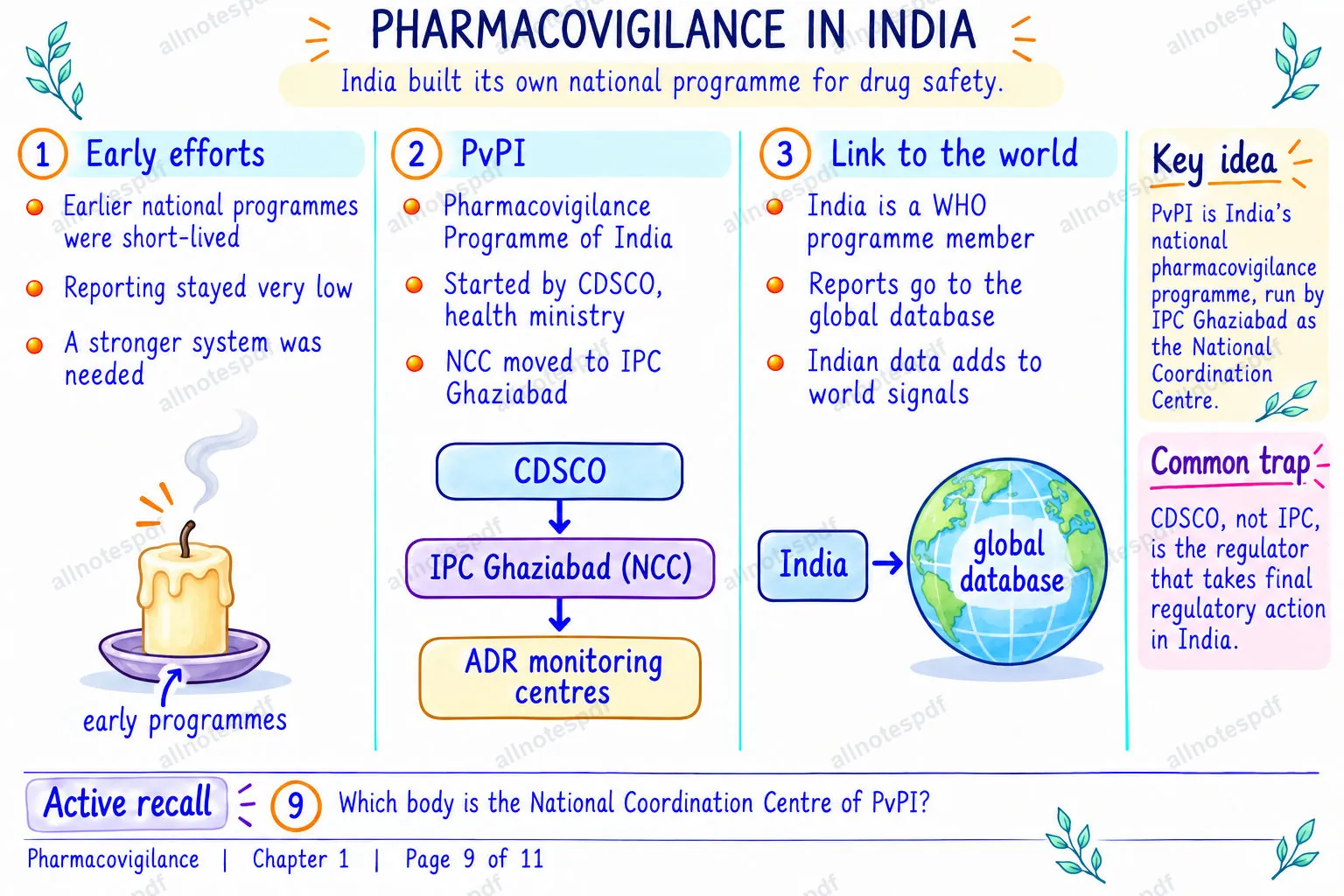
Covers pharmacovigilance Programme of India: aims, IPC Ghaziabad as National Coordination Centre, CDSCO as regulator, structure and committees, reporting flow, reporting forms, helpline and mobile app.
Covers adverse drug reactions: WHO and Edwards–Aronson definitions, related terms, Rawlins–Thompson types A to F, pharmacological, pharmacokinetic, immunological and idiosyncratic mechanisms, and patient and drug risk factors.
Covers methods of ADR monitoring, detection of ADRs and signals, reporting and the suspected ADR reporting form, and management of ADRs by dechallenge, rechallenge and treatment.
Covers assessment of ADRs: causality by the WHO-UMC system and the Naranjo scale, seriousness and severity by the Hartwig scale, predictability, and preventability by the Schumock and Thornton criteria.
Covers online ADR reporting mechanisms, pharmacovigilance databases and software (WHO-ART, VigiBase, VigiFlow, Oracle Argus Safety, OpenVigil) and the MedDRA terminology with its five-level hierarchy.
Covers definition, scope and significance of immunovigilance, cosmetovigilance, nutraceutical vigilance, materiovigilance, herbovigilance, ecopharmacovigilance and haemovigilance.
Covers vaccination failure, vaccine pharmacovigilance (vaccinovigilance), adverse events following immunisation and their WHO cause-specific categories, AEFI causality classification and immunisation safety monitoring in India.
Covers risk evaluation and management strategies in pharmacovigilance and immunovigilance (RMP and REMS), communication in drug safety crises, communication with regulators, business partners and healthcare facilities.
Covers overview of safety data generation, objectives of ICH guidelines and the E2A to E2F series, expedited and aggregate reporting, individual case safety reports, periodic safety update reports and PBRERs.
Covers good clinical practice and safety reporting duties of investigator, sponsor and ethics committee under the New Drugs and Clinical Trials Rules, 2019, and the application of pharmacogenomics and pharmacometrics in pharmacovigilance.
What you get
- Format
- Downloadable PDF (not a printed book)
- Chapters
- 16 chapter PDFs, one per syllabus unit topic
- Syllabus
- B Pharm Semester 7, PCI NEP-2020 syllabus for Pharmacovigilance
- Style
- Handwritten-style notes with colour diagrams, flowcharts and formula boxes
- Devices
- Phone, tablet and laptop. Print any chapter if you like
- Access
- Lifetime. Download again anytime from My library
- Instant downloadRight after payment
- Free updatesCorrections added free
- Secure paymentUPI, cards, net banking